Every November the calls start coming in. Someone's turned their heating on for the first time since March and something's not right. The pressure's dropped, the boiler's making a noise it wasn't making before, or the radiators aren't getting properly warm. Some of these turn out to be simple fixes. Some are signs that the boiler has been quietly deteriorating through the summer while nobody was looking.
The Call, Late November
The call from a family in Bishop's Stortford came in on a Wednesday morning in late November. Their boiler was running, just about, but the pressure kept dropping, and they'd noticed the radiators weren't as warm as they should be. With Christmas three weeks away and a house full of family expected, they wanted it looked at before the worst possible time of year for a breakdown.
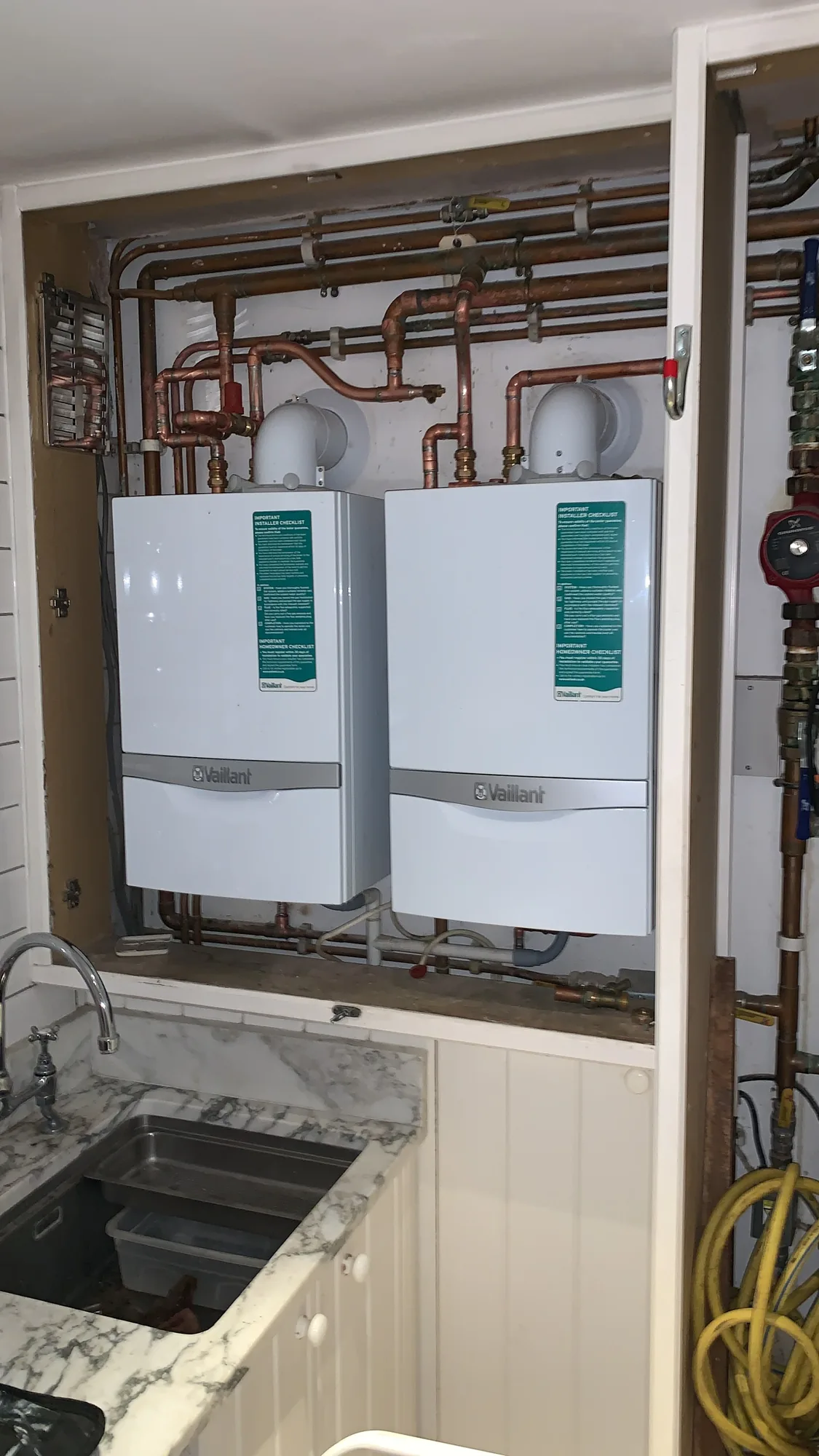
Thomas visited that afternoon. The boiler was a gas combi, around twelve years old, and it hadn't been serviced in the six years since the family had moved in. The assumption had been that because it was working, it was fine.
What Thomas Found
When Thomas opened it up, he found what he'd half expected. The heat exchanger had a small crack in it, the kind that forms gradually in an unserviced boiler. It wasn't catastrophic yet, but it was leaking gases internally and losing pressure as a result. Left another month, particularly through December when the boiler would be working harder than at any other point in the year, it would almost certainly have failed completely. That's the scenario nobody wants: a broken-down boiler on the 23rd of December, with engineers booked up solid and parts sitting on extended delivery through the bank holidays.
The Conversation
Thomas explained what he'd found, not in terms designed to alarm, just a clear account of what was happening and what the options were. A heat exchanger replacement was possible in theory, but on a twelve-year-old boiler with no service history, the cost of the part and the labour would be most of the way to the cost of a new boiler. And a new boiler would come with a warranty, run more efficiently, and not have twelve years of unserviced wear already accumulated.
They talked it through together. The family decided to go ahead with a replacement. Thomas came back two days later with the new unit and had it installed and running by mid-afternoon. He walked them through the controls, showed them how to check the pressure, and left them with his number in case anything came up over the holidays.
The Work
They had heating and hot water for Christmas, which sounds like the bare minimum expectation, but it isn't. For a significant number of households every winter, Christmas falls during a breakdown they weren't expecting and couldn't have predicted, because the boiler had never been looked at properly.
What this comes down to is straightforward. An annual service costs a relatively small amount. What it does is give an engineer the chance to catch problems while they're still minor, before they turn into complete failures. The service Thomas carried out that November found the crack early enough that a planned replacement could happen on a normal working day, with time to order the right unit and fit it properly. That's a very different situation from an emergency call-out in December when you're competing with every other household whose boiler has given up at the same time.
The Lesson
The family in Bishop's Stortford hadn't had their boiler serviced in six years because it had been running fine. That logic is understandable. The boiler's not broken, so why touch it? The answer is that things go wrong gradually. A heat exchanger doesn't crack overnight. It deteriorates slowly, and that deterioration is visible on a service long before it shows up as a complete failure.
If you can't remember when your boiler was last serviced, that's worth thinking about before winter settles in. Thomas covers Bishop's Stortford, Stansted, Saffron Walden, Dunmow and the surrounding area. Call him on 07774 323248 or get in touch through the contact form.